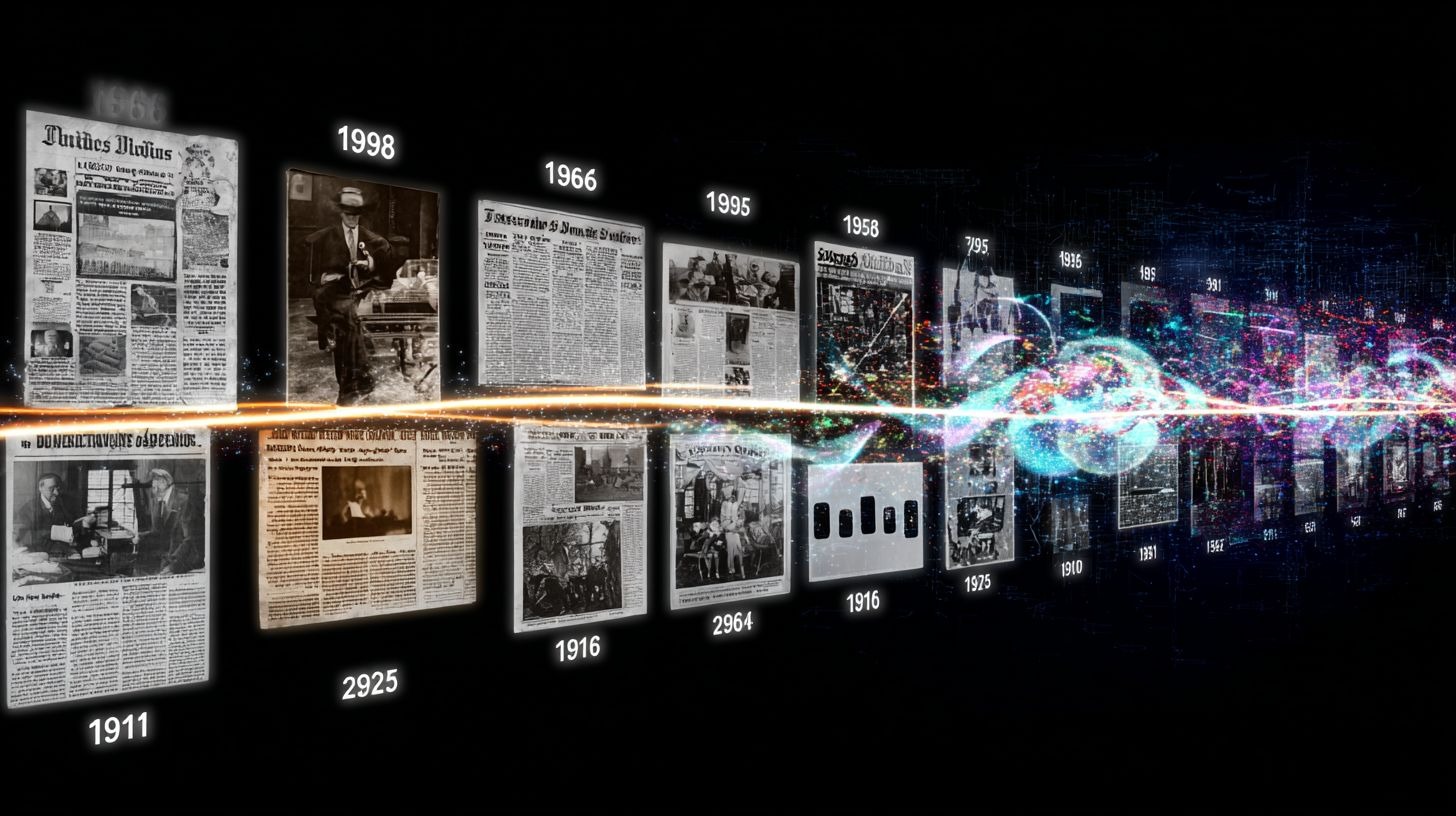
In 1994, The New York Times launched its website, marking the quiet revolution that upended news delivery forever. From print’s reign to algorithms curating feeds, digital evolution has reshaped access, speed, and trust. This article traces the journey-through Web 2.0 social surges, mobile apps, and AI-driven futures-revealing how 12 pivotal shifts redefined information flow. Discover what’s next.
Pre-Digital Era
Before 1990, newspapers reached 62% of U.S. adults daily while TV news captured 90% viewership, dominating information flow through physical distribution and scheduled broadcasts. The New York Times peaked at 1.1 million daily copies, relying on massive printing plants. Editors acted as gatekeepers, selecting stories for print runs.
TV programs like NBC Nightly News drew 30 million viewers each night, delivered via broadcast signals. The AP wire service distributed facts to 1,300 newspapers, ensuring uniform coverage. This system controlled print media and broadcast news tightly.
Physical limitations shaped news media pace, with deadlines tied to delivery trucks and airwaves. Reporters filed stories via teletype, feeding into centralized newsrooms. This era set the stage for digital transformation, as internet distribution began to challenge these constraints.
Wire services like AP and Reuters streamlined content syndication for publishers. Editors curated investigative reporting and daily updates. The shift to online journalism would soon disrupt this controlled ecosystem.
Print and Broadcast Dominance
In 1980, The New York Times printed 1.1 million daily copies using 4-color offset presses costing $50M each, while ABC World News Tonight reached 45 million households via 1,000+ local affiliates. Print circulation hit 62 million daily in the U.S. during its 1980s peak, generating $45 billion in yearly ad revenue. Broadcast news commanded high Nielsen ratings, often securing a 60 share for evening slots in a 30-minute national format.
Wire services like AP and Reuters delivered facts to 3,000 outlets, enabling rapid story sharing among newsrooms. Editors and reporters shaped narratives through rigorous fact-checking. This structure supported in-depth investigative reporting, as seen in Watergate coverage.
Watergate unfolded across print and TV: The Washington Post broke initial stories in 1972, with TV networks providing nightly updates by 1973, culminating in Nixon’s 1974 resignation. Print offered detailed timelines, while broadcasts captured live hearings. These platforms defined legacy media credibility.
Physical distribution limited reach to regional or national scales, with editors as primary gatekeepers. Ad dollars funded expansive operations, from correspondents to presses. This dominance persisted until digital news distribution introduced real-time updates and global access.
Internet Dawn (1990s)
The 1990s saw newsrooms launch static HTML sites as supplements to print, with CNN.com debuting in 1995 and reaching 1 million monthly visitors by 1998. Dial-up connections at 28.8kbps limited content to text-heavy pages. The New York Times site drew 800K visits per month by 1996, marking the start of digital news distribution.
These early news websites complemented print media and broadcast news. Publishers viewed online journalism as an extension, not a threat. Yet, this shift laid groundwork for internet distribution challenging legacy models.
Newsrooms faced dial-up limitations, with slow load times frustrating users. First sites emerged in 1993-95, evolving from simple directories to basic articles. This period transitioned online efforts from supplement to competitor against print.
Experts note how digital transformation began here, with wire services like AP adapting content for web. Real-time updates were rare, but the foundation for online journalism took hold amid growing user interest.
Online News Portals
MSN.com launched as Microsoft’s portal in 1996, aggregating 200+ newspapers via proprietary deals, while AOL News served 20 million dial-up users with curated briefs. CNN.com pioneered in 1995 as the first with 24/7 streaming video. Banner ads at $20 CPM drove early advertising revenue.
NYT Digital, starting in 1996 with a $25M investment, offered in-depth articles. Yahoo News in 1996 featured human-curated feeds, personalizing content for users. MSNBC, also 1996, blended Microsoft tech with NBC reporting for broad appeal.
These portals boosted news aggregation, pulling from print and broadcast sources. Revenue relied on display ads amid low bandwidth constraints. They set stages for freemium models and subscriptions later on.
Portals like these introduced RSS feeds precursors, aiding content syndication. Publishers experimented with interactivity, foreshadowing multimedia storytelling in digital news evolution.
Early Digital Challenges
News sites crashed during OJ Simpson chase coverage in 1995 as 28.8kbps dial-up users overwhelmed servers, with CNN.com handling 1GB traffic spikes on 100Mbps T1 lines. Server crashes peaked on 1996 election night. Content delivery networks like Akamai in 1998 began solving these issues.
Business fears of cannibalization grew, as NYT considered print cuts. User experience suffered from 10-minute page loads on slow connections. Publishers tested early paywalls to balance access.
- Technical problems: Frequent outages during breaking news like elections.
- Business hurdles: Worries over lost print subscriptions.
- UX issues: Long waits for images and text to load.
- Legal battles: AP sued aggregators over online copyright and fair use.
Solutions emerged with CDNs improving speed and reliability. These challenges pushed newsrooms toward innovation, paving ways for SEO, search engines, and future digital natives engagement.
Web 2.0 Revolution (2000s)
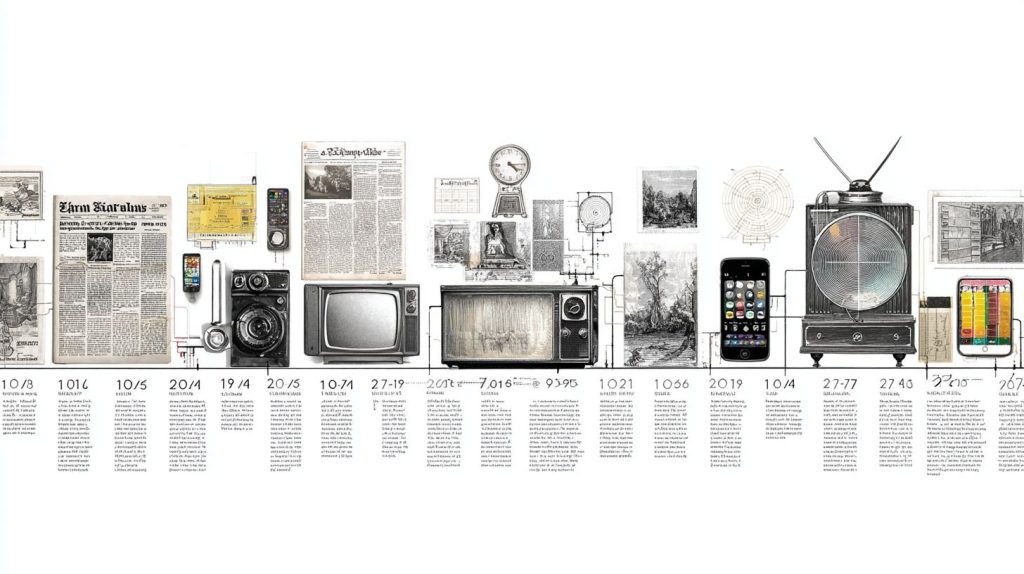
Web 2.0 shifted news consumption with MySpace reaching massive users and RSS feeds enabling Drudge Report to drive significant major news traffic. This era marked the rise of user participation in digital news distribution. Platforms like Digg, launched in 2004, handled thousands of stories daily, fostering democratization of content.
RSS adoption grew rapidly, with tools like FeedBurner peaking at millions of feeds. Users could pull personalized news from multiple sources effortlessly. Yet, this openness sparked quality concerns, as unverified user-generated content mixed with professional journalism.
The shift give the power toed citizen journalism and challenged legacy media. News websites evolved into interactive hubs with comments and shares. This digital transformation laid groundwork for social media dominance in online journalism.
Experts note that Web 2.0 blurred lines between publishers and audiences. Print media and broadcast news faced disruption from internet distribution. Real-time updates via aggregation platforms accelerated breaking news cycles.
Social Media Emergence
Facebook News Feed launched in 2006, boosting engagement dramatically while Twitter’s character limit fueled Obama’s campaign with frequent follower updates. MySpace, starting in 2003, saw early news shares among users. Digg gained traction in 2004 with a community-driven model.
Twitter’s role exploded during events like the Iran elections, enabling rapid real-time updates. Platforms compared on user base, news sharing volume, and algorithm types showed varied strengths. Facebook prioritized connections, while Twitter favored timeliness.
| Platform | Launch Year | Peak Users | News Share Focus | Algo Type |
| MySpace | 2003 | Millions | Early shares | Profile-based |
| Digg | 2004 | 1M+ | Community votes | Popularity ranking |
| 2006 News Feed | Hundreds of millions | Feed curation | EdgeRank | |
| 2006 | Millions | Hashtag trends | Chronological + relevance |
By late 2000s, major outlets like CNN drew substantial traffic from Twitter. Social media introduced viral content and user engagement metrics like shares and likes. This evolution pressured newsrooms to adapt to platform gatekeepers.
RSS and Aggregation
RSS 2.0, released in 2002, powered Google News aggregation of thousands of sources into personalized feeds, driving key search referrals by mid-decade. This enabled seamless content syndication across news websites. Users accessed updates without visiting sites constantly.
Platforms like FeedBurner managed millions of feeds, while Bloglines served millions of users. Google News started with thousands of sources, refining to curated selections. These tools supported aggregation platforms in the digital news ecosystem.
| Platform | Launch | Sources | Peak Users | Model |
| Google News | 2002 | Thousands refined | Millions | Automated curation |
| FeedBurner | 2004 | N/A | 1M+ feeds | Feed management |
| Bloglines | 2003 | Varied | 15M | Reader service |
To set up RSS on WordPress, add a widget via Appearance > Widgets > RSS and input your feed URL. This practical step boosts user engagement with newsletters and podcasts. By 2008, global RSS readers peaked in the tens of millions, highlighting its role before social feeds rose.
Mobile Transformation (2010s)
The iPhone App Store launch in 2008 saw news apps explode, with the NYT app hitting 1M downloads by 2010 and a large share of U.S. adults accessing news via mobile. Smartphone penetration grew rapidly from 2010 to 2018, shifting digital news distribution from desktops to pockets. This era marked the rise of app revenue and debates over native versus web apps.
News organizations adopted mobile-first design to prioritize smaller screens and touch interfaces. Print media and broadcast news faced disruption as users turned to apps for real-time updates. Legacy outlets like the New York Times and Washington Post led the charge in online journalism adaptation.
The transition boosted user engagement through personalization and push notifications. Social media platforms amplified this shift, with news feeds blending professional and user-generated content. Experts recommend focusing on multimedia storytelling to retain digital natives and millennials.
Mobile apps became central to news media evolution, enabling global reach and localization. This period saw convergence of text, video news, and interactivity, challenging traditional gatekeepers. Publishers embraced data analytics to track dwell time and shares.
Smartphone Apps
Flipboard launched in 2010 with magazine-style aggregation for iPad, reaching massive user bases by 2015, while Apple News from 2015 powered much iPhone news consumption. These apps transformed digital news distribution by curating content from news websites and social media. BuzzFeed excelled with native video tailored for mobile scrolling.
Development choices pitted native apps against progressive web apps, balancing costs and performance. Native builds offered smoother experiences but higher expenses, while PWAs provided broader access. Newsrooms weighed these for features like offline reading and personalization.
| App | Launch | Key Users | Revenue Model | Standout Features |
| 2010 | Large global audience | Advertising, freemium | Magazine layouts, social integration | |
| Apple News | 2015 | iOS users | Subscriptions, ads | Curated feeds, Apple ecosystem |
| Google Newsstand | 2011 | Android users | Programmatic ads | Personalization, offline access |
| BuzzFeed | Early 2010s | Young demographics | Native ads, viral shares | Short videos, quizzes |
The Washington Post app exemplifies success, with most traffic now mobile-driven. It integrates push notifications and live streaming for breaking news. Publishers use API integrations for content syndication from wire services like AP and Reuters.
Push Notifications
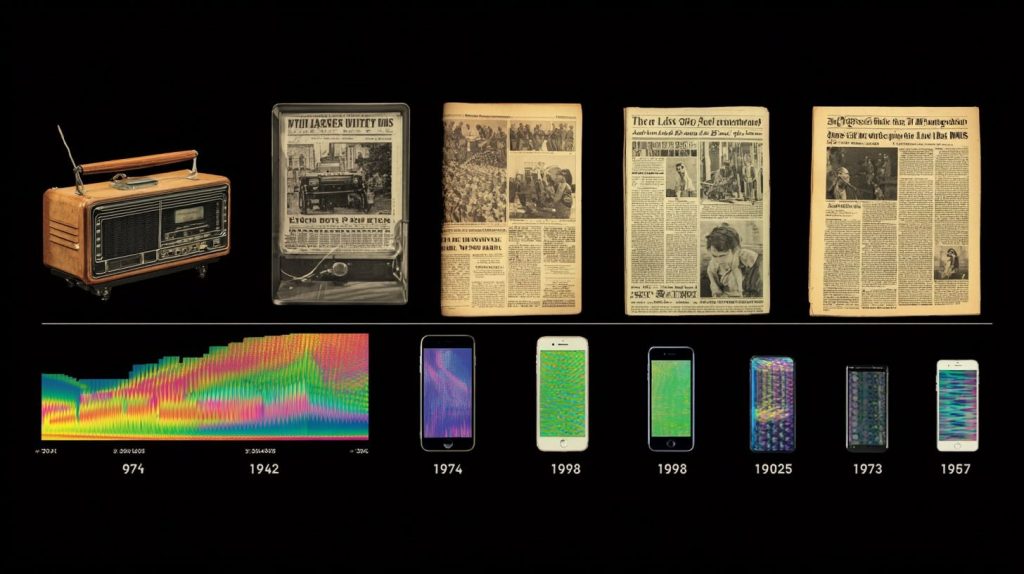
CNN push alerts during the 2013 Boston Marathon bombing drove sharp traffic spikes, with opt-in rates common across top news apps. These tools revolutionized real-time updates in digital transformation, pulling users back for breaking news. They boosted engagement metrics like opens and time spent.
Implementation starts with Firebase setup on a free tier for many users, followed by segmentation by geo or topic. Set frequency caps to avoid fatigue, such as a few per day. A/B testing refines click-through rates through trial and error.
- Configure Firebase for cross-platform delivery.
- Segment audiences for relevant alerts, like local weather or politics.
- Apply caps to maintain trust and reduce unsubscribes.
- Test variations to optimize performance.
| Alert Type | Open Rate Example | Time to Open |
| Breaking news | High, near immediate | Seconds |
| Daily digest | Moderate | Minutes |
| Personalized story | Variable | Quick for interests |
Best practices favor breaking news alerts for high opens and daily digests for retention. Pair with fact-checking to combat misinformation. This keeps news apps ahead of social media in credibility and speed.
Modern Platforms and Algorithms
Facebook’s 2018 algorithm change cut news reach from 20% to 5% of page fans, forcing publishers to boost video content 300%. This shift highlighted algorithm dominance in digital news distribution, where platforms now control most discovery. Publishers face risks from platform dependency and must adapt to engagement metrics.
News media outlets prioritize content that drives likes, shares, and comments to stay visible. The evolution from print media to social media feeds demands constant tweaks for personalization and recommendation engines. Risks include sudden changes that slash traffic overnight.
Social newsfeeds preview how algorithms shape online journalism. Platforms like Twitter and TikTok use machine learning to push timely updates and viral clips. Publishers counter this by focusing on multimedia storytelling and real-time engagement.
Legacy media adapts through mobile apps and streaming platforms, blending broadcast news with user-generated content. Experts recommend diversifying beyond one platform to build direct audience ties via newsletters and podcasts. This digital transformation ensures resilience against algorithm whims.
Social Newsfeeds
TikTok For You page algorithm delivered news to 40% Gen Z users in 2022, surpassing CNN’s 15-24 demo by 3x through 15-second vertical videos. This shows TikTok’s rise in digital news distribution for digital natives. Platforms compare sharply in how they favor content types.
Facebook penalizes engagement bait, pushing authentic interactions instead. Twitter thrives on timely, verified posts for breaking news and real-time updates. Instagram relies on Stories for ephemeral content that boosts daily engagement.
| Platform | Reach Factor | Content Type | Best Practice |
| Engagement signals | Video and live streaming | Encourage meaningful comments | |
| Timeliness and verification | Short text with threads | Use hashtags for trends | |
| Visual appeal | Stories and Reels | Add polls and stickers | |
| TikTok | For You page personalization | Vertical short videos | Hook in first 3 seconds |
The BBC case study exemplifies success, gaining 2.5M followers and 200M views on TikTok with fun, quick explainers on global events. Publishers should test short-form video to reach Gen Z. Mix education with entertainment to cut through misinformation.
Future Trends
The evolution of digital news distribution points to convergence of AI, decentralization, and immersive tech. News media increasingly blends machine learning with blockchain platforms and AR experiences. Experts predict growth in voice assistants and smart speakers for daily briefs.
By 2025, AI news personalization will deliver content via voice assistants, while blockchain platforms challenge centralized gatekeepers. This shift give the power tos online journalism with direct user connections. Platforms like Alexa and Siri already offer news feeds tailored to user habits.
Immersive tech such as VR experiences and metaverse news will redefine storytelling. Decentralized media reduces reliance on traditional gatekeepers. Journalists can experiment with tokenized content and NFTs for ownership.
These trends signal a digital transformation from print media and broadcast news to interactive, global formats. Newsrooms adopt AI curation and Web3 tools for real-time updates and user engagement.
AI Personalization
The New York Times’ 2023 AI experiment increased subscriber retention by serving personalized article variants from templates. This highlights how recommendation engines boost dwell time and shares. Publishers now use AI to match content with reader interests.
Key systems include Google Discover for broad reach, NYT Wirecutter for product recommendations, Artifact app with GPT-4 summaries, and Perplexity AI for conversational news. These tools rely on tech stacks like TensorFlow and BERT. They improve topic matching through natural language processing.
Implementation involves training models on user data for precise feeds. News websites and mobile apps integrate these for push notifications and news briefs. This personalization combats fake news by prioritizing fact-checked sources.
- Google Discover curates stories based on search history.
- NYT Wirecutter suggests buys with AI analysis.
- Artifact generates quick summaries from headlines.
- Perplexity answers queries in natural dialogue.
Decentralized Distribution
Mirror.xyz launched in 2021 enables journalists to earn via crypto tips, bypassing platform fees of traditional models. This fosters decentralized media and disintermediation from gatekeepers. Writers gain control over distribution and payments.
Platforms like Mirror.xyz use NFT articles, Substack offers newsletters, Ghost provides self-hosted options, and Lens Protocol builds Web3 social features. Setup often includes IPFS for storage and Ethereum wallet integration. These support podcasts, video news, and tokenized content.
| Platform | Model | Earnings | Users |
| Mirror.xyz | NFT articles | Crypto tips | Web3 creators |
| Substack | Newsletters | Subscriptions | Millions of readers |
| Ghost | Self-hosted | Direct sales | Independent publishers |
| Lens Protocol | Web3 social | Tokenized posts | Decentralized networks |
Case studies show Bankless with paid subscribers and The Defiant using crypto revenue. These models enhance trust through blockchain transparency. Journalists experiment with open source journalism and collaborative tools.
Frequently Asked Questions
What is the evolution of digital news distribution?
The evolution of digital news distribution refers to the transformation from traditional print and broadcast media to online platforms, starting with early internet portals in the 1990s, advancing through social media sharing, mobile apps, and now AI-driven personalization, revolutionizing how news reaches global audiences instantly.
How has the internet changed digital news distribution?
The internet has accelerated the evolution of digital news distribution by enabling real-time updates, multimedia content, and global accessibility, shifting power from gatekept newspapers to user-generated platforms like websites and aggregators.
What role did social media play in the evolution of digital news distribution?
Social media has been pivotal in the evolution of digital news distribution, allowing viral sharing, citizen journalism, and algorithmic feeds on platforms like Twitter and Facebook, which now rival traditional outlets in reach and speed.
What are the challenges in the evolution of digital news distribution?
Challenges in the evolution of digital news distribution include misinformation spread, declining ad revenue for publishers, privacy concerns with data tracking, and the rise of paywalls amid free content expectations.
How has mobile technology influenced the evolution of digital news distribution?
Mobile technology has driven the evolution of digital news distribution by prioritizing app-based push notifications, short-form videos like TikTok news, and location-based personalized content, making consumption on-the-go ubiquitous.
What is the future of the evolution of digital news distribution?
The future of the evolution of digital news distribution lies in AI curation, immersive VR storytelling, decentralized blockchain verification, and subscription models, promising more tailored, trustworthy, and interactive news experiences.
Leave a Reply