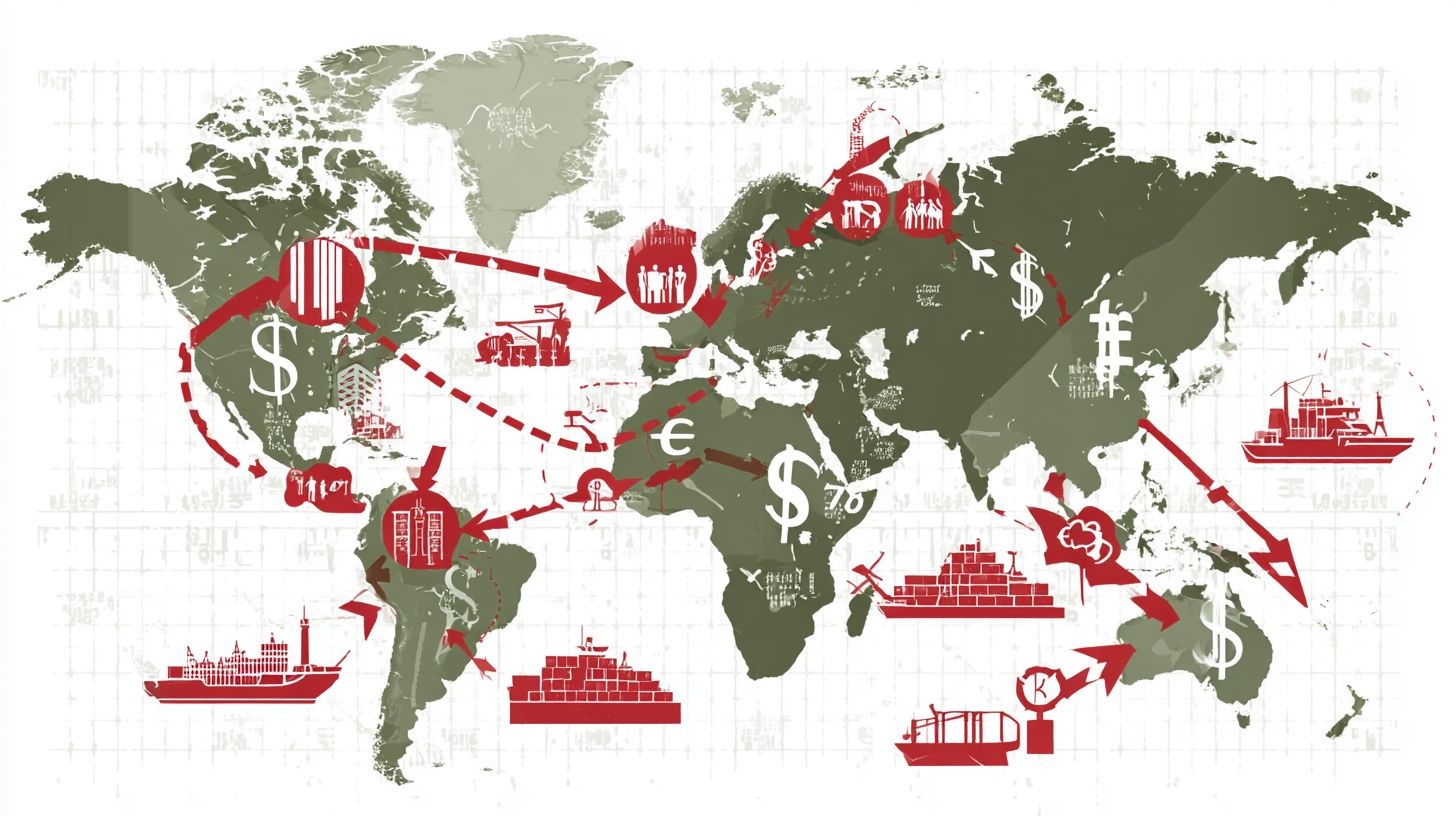
In 2022, the Russia-Ukraine conflict triggered a 15% surge in the USD against the EUR, reshaping global portfolios overnight. Forex rates don’t move in isolation-they’re profoundly influenced by world events. This article explores central bank policies, geopolitical tensions, economic data, disasters, commodities, elections, and market sentiment. Discover how to anticipate these shifts for smarter trading.
Federal Reserve Decisions
FOMC meetings trigger average 140 pip moves in USD pairs. The June 2022 75bps hike caused DXY to surge 2.5%. These decisions shape forex rates through shifts in interest rates.
The FOMC breaks down into key components. First, the rate decision sets the federal funds rate target. Traders watch for hikes or cuts that signal monetary policy direction.
Next, dot plot shifts reveal future rate expectations from committee members. A shift higher, like the 2023 median at 5.1%, boosts USD strength. Powell’s press conference keywords, such as ‘higher for longer’, often drive further moves.
For trading, check the economic calendar before events. Use the CME FedWatch Tool for rate hike probabilities. A strategy is to fade the initial 50 pip spike and target 100 pip continuation in the trend direction.
- Monitor FOMC components: rate decision, dot plot, press conference.
- Review CME FedWatch Tool for implied probabilities.
- Fade knee-jerk reactions in major pairs like EURUSD or USDJPY.
- Set stop-loss beyond recent highs or lows for risk management.
Global events like these influence currency pairs via capital flows. Hawkish signals increase risk-off sentiment, favoring safe-haven USD. Practice on demo accounts to refine event-driven trading.
ECB and Other Major Banks
ECB rate decisions moved EUR/USD 180 pips in July 2022. BOJ interventions spiked USD/JPY 400 pips in 2022. These moves show how central banks drive forex rates through monetary policy.
Traders watch interest rate hikes, yield controls, and surprises from major banks. Actions like these shift currency pairs based on market expectations. Global events amplify these effects on exchange rates.
The table below compares key banks, their current rates, recent actions, and average pip impact. Use this for event-driven trading in the forex market.
| Bank | Current Rate | Recent Action | Avg Pip Impact |
| ECB | 4.50% | 50bps hikes | 100-150 pips |
| BOE | 5.25% | 425bps total hikes 2022 | 120-200 pips |
| BOJ | -0.10% | Yield curve control | 200-400 pips |
| RBA | 4.35% | Surprise 25bps July 2023 | 80-120 pips |
A ECB dovish stance often triggers EUR sell-off, pushing EUR/USD lower. Pair this with hawkish/dovish scorecards to predict moves. Check the ECB calendar for key dates like Governing Council meetings on October 17, December 12, and January 23.
Track hawkish signals like tighter policy talk versus dovish hints of rate cuts. BOJ yield curve control keeps JPY weak, fueling carry trades. RBA surprises boost AUD on risk appetite.
For trading, set stop-loss orders before announcements. Use economic calendars to avoid market volatility. Combine with fundamental analysis for better pip movement forecasts.
Wars and Trade Disputes
The 2022 Ukraine war saw RUB collapse 40%, EUR/USD parity first time since 2002. The Russian invasion on February 24 triggered sharp shifts in forex rates. Traders watched currency pairs like EUR/USD drop to 1.08 as risk-off sentiment boosted the USD.
RUB/USD plunged to 0.011 amid geopolitical tensions and sanctions. This Russia-Ukraine conflict highlighted how wars disrupt capital flows and safe-haven demand for USD and JPY. Energy prices surged, pressuring EUR and emerging market currencies.
In trade disputes, the US-China Phase 1 deal stabilized USD/CNY around 6.90 after years of volatility. Tariffs and negotiations altered exchange rates through shifts in trade balances. Such events often widen bid-ask spreads in the forex market.
Risk metrics like VIX rising signal buying USD, while gold gains point to hedging. Use these to gauge market volatility. Combine with fundamental analysis for event-driven trading.
- Pre-event, take 50% position size to manage exposure.
- Trail stops at 100 pips to protect gains amid swings.
- Exit on negotiation headlines to avoid reversals.
GDP, Employment, and Inflation Reports
US CPI surprise greater than 0.2% triggers 100 pip USD moves; Q1 2022 GDP miss tanked USD/JPY 250 pips. These economic indicators drive forex rates by signaling the health of economies like the US. Traders watch them closely for shifts in interest rate expectations from central banks such as the Federal Reserve.
Priority goes to NFP on the first Friday of each month, with a whisper number around 125K jobs added. Next is CPI in the second week, focusing on core ex-shelter figures that strip out volatile food and energy. GDP Advance releases hit Wednesdays at 8:30 ET, offering early GDP growth snapshots.
Beats on forecasts strengthen the USD, targeting 100 pips in major pairs like EUR/USD. Misses spark sells, as seen in past GDP shortfalls. Revisions matter too; a second-month NFP upward tweak adds extra 50 pips of upside.
| Report | Date Example | Forecast vs Actual |
| Q3 2023 CPI | Second week | 3.7% vs 3.6% est |
| NFP | First Friday | 125K whisper |
| GDP Advance | Wed 8:30 ET | Advance estimate |
News trading these events demands preparation with an economic calendar. Set stop-loss orders to manage volatility from data surprises. Combine with fundamental analysis for better forex forecasts on pairs like GBP/USD or USD/JPY.
Oil and Gold Market Impacts
The oil price rally from $80 to $120 in 2022 supported USD/CAD from 1.25 to 1.38, delivering 1,300 pips. This move highlighted how global events like OPEC decisions drive forex rates. Commodity prices often dictate currency exchange for resource-linked economies.
Oil shows a strong positive correlation with USD/CAD at +0.85, as higher prices bolster the Canadian dollar. Traders watch OPEC calendar events, such as the June 2, 2024 meeting, for supply cuts that spike oil prices. These shifts create volatility in currency pairs tied to energy exports.
For trading setups, consider an oil breakout above $85 to buy CAD against the USD. Gold above $2,050 signals risk-off conditions, strengthening the dollar. Combine fundamental analysis with technical levels for event-driven trading.
- Monitor COT data: Net longs over 200K suggest trend continuation.
- Pair oil surges with CAD strength in USD/CAD.
- Track gold rallies for safe-haven flows into USD or CHF.
Gold correlates negatively with AUD/USD at -0.72 and USD/CHF at -0.65. Rising gold prices reflect geopolitical tensions, pushing investors toward safe-haven currencies. Use these links for hedging in volatile forex markets.
Central Bank Policies and Interest Rates
Central bank decisions account for 35% of forex volatility per BIS data, with Fed announcements averaging 120 pip moves in EUR/USD. These institutions shape forex rates by adjusting interest rates and monetary policy. Traders watch these moves closely for opportunities in the foreign exchange market.
Central banks like the Federal Reserve, ECB, Bank of England, and BOJ control currency direction through rate changes. Higher rates attract capital inflows, strengthening the currency. Lower rates often weaken it by encouraging spending over saving.
Interest rate hikes signal tighter policy to combat inflation, boosting currencies like the USD or GBP. Rate cuts, meanwhile, support growth but can spark market volatility. Global events amplify these effects, as seen in responses to pandemics or trade wars.
Traders use fundamental analysis to predict shifts. Monitor economic calendars for FOMC meetings or ECB policy updates. Position before announcements with stop-loss orders to manage risk.
Fed’s Influence on USD Strength
The Federal Reserve drives USD movements through FOMC meetings and rate decisions. Hawkish signals, like planned interest rate hikes, strengthen the dollar by drawing investors. Dovish tones often weaken it amid risk-off sentiment.
Consider examples like post-COVID recovery phases. Fed tapering announcements lifted DXY, pressuring EUR/USD lower. Traders hedge with currency pairs involving safe-haven JPY or CHF.
For news trading, check consensus forecasts versus actual data. A surprise hike can cause sharp pip movements. Use technical analysis to confirm trends post-event.
Practical strategy: Buy USD on hawkish forward guidance. Set take-profit levels near recent highs. Avoid over-leverage during high volatility index spikes.
ECB and Eurozone Policy Impacts
The ECB manages EUR via quantitative easing or rate adjustments amid eurozone challenges. Policies addressing inflation or GDP growth directly sway exchange rates. Geopolitical tensions, like elections, heighten reactions.
Recall ECB responses to the eurozone crisis. Extended QE weakened EUR against majors. Traders watch CPI and PMI for policy clues, trading cross pairs like EUR/GBP.
Actionable advice: Position short EUR before dovish ECB meetings. Pair with carry trades favoring higher-yield currencies. Monitor bond yields for confirmation.
Use an economic calendar for press releases. Post-event, assess market reaction for adjustments. This event-driven approach suits spot rates trading.
BOJ Interventions and JPY Volatility
The BOJ uses currency intervention and ultra-low rates to cap JPY strength. Yield curve control influences swap rates and investor flows. Global events like the US-China trade war amplify yen moves as a safe-haven currency.
BOJ actions during risk-off periods, such as the Russia-Ukraine conflict, weaken JPY via selling. Traders spot patterns in bid-ask spreads during interventions.
Strategy tip: Fade JPY strength post-intervention rumors. Combine with technical analysis on USD/JPY. Hedge using AUD/JPY for carry trade plays.
Track BOJ summaries for hints of policy pivots. Pre-position with tight stop-loss amid interbank market liquidity shifts. Focus on major pairs for best execution.
Geopolitical Conflicts and Tensions
The Russia-Ukraine invasion in February 2022 drove the USD to 20-year highs against the EUR, hitting a low of 1.08, as investors sought safe-haven currencies amid rising uncertainty.
Geopolitical conflicts often trigger risk-off moves in the forex market, pushing traders toward the USD, JPY, and CHF. These events disrupt capital flows and heighten market volatility, leading to sharp shifts in exchange rates.
For instance, during crises, pairs like USD/JPY can experience significant declines as yen strengthens on safe-haven flows. Traders use fundamental analysis to anticipate such reactions and position for event-driven trading.
To navigate these tensions, monitor economic calendars for summit meetings and news releases. Set stop-loss orders to manage pip movements from sudden geopolitical tensions, and consider hedging with major pairs.
Russia-Ukraine Conflict
The ongoing Russia-Ukraine conflict exemplifies how wars boost demand for the USD as a safe-haven currency. Energy supply disruptions from the region spiked oil prices, influencing inflation rates and central bank responses worldwide.
Forex traders saw currency pairs like EUR/USD weaken sharply due to risk-off sentiment. The ECB faced pressure to adjust monetary policy, while the Federal Reserve hiked interest rates to combat imported inflation.
Practical advice includes watching OPEC decisions and commodity prices tied to the conflict. Use news trading strategies around press releases, but avoid knee-jerk reactions by confirming with technical analysis.
Long-term, such events can lead to capital flows shifting from emerging markets to developed ones. Track the dollar index (DXY) for broader forex market direction during escalated tensions.
US-China Trade War
The US-China trade war introduced tariffs that rattled global supply chains and exchange rates. Currency pairs involving USD and CNY saw heightened volatility as markets priced in economic impacts.
Traders noted AUD and CAD weakening on commodity export fears, while USD gained from risk appetite decline. Central banks like the Federal Reserve and PBoC responded with policy tweaks to stabilize currency exchange.
Focus on trade balance data and G20 summits for signals. Employ hedging in cross pairs like AUD/USD during tariff announcements to protect against market volatility.
Experts recommend combining event-driven trading with interbank market liquidity checks. This approach helps predict spot rates shifts from ongoing trade wars.
Middle East Tensions
Middle East tensions frequently drive oil prices higher, affecting currencies tied to energy like CAD and NOK. Safe-haven bids strengthen JPY and CHF in response to regional instability.
Forex markets react to threats of supply disruptions, boosting USD via flight to quality. The BOJ may consider currency intervention if JPY surges too rapidly.
Monitor commodity supercycle trends and IMF reports for context. Use forward rates to gauge expectations and set take-profit levels on energy-sensitive pairs.
During flare-ups, bid-ask spreads widen, so prioritize liquid major pairs. This strategy mitigates risks from black swan events in the region.
Economic Data Releases
Non-farm payrolls that beat or miss consensus by 50K jobs often move the USD by 80 pips in most cases. Traders watch these high-impact data releases, known as red folder events on economic calendars, for their power to drive forex rates. The market reacts more to surprises between forecasts and actual figures than to the numbers alone.
Consider the non-farm payrolls report from the US Bureau of Labor Statistics. A stronger-than-expected unemployment rate drop boosts the dollar as it signals a healthy labor market. Conversely, weaker data sparks selling pressure on currency pairs like EUR/USD.
Other key releases include CPI for inflation rates, GDP growth figures, and retail sales. These economic indicators influence central banks like the Federal Reserve and shape expectations for interest rate hikes or cuts. Traders position before events, adjusting after based on data surprises.
To trade effectively, check the economic calendar for release times and consensus forecasts. Use stop-loss orders to manage volatility from news trading. Focus on major pairs where liquidity supports quick moves.
Natural Disasters and Supply Shocks
COVID-19 March 2020 crash saw USD/JPY -3.5% in 2 days. Hurricane Katrina 2005 spiked oil prices +$3/barrel instantly. These global events triggered sharp shifts in forex rates through supply disruptions.
Natural disasters create immediate supply shocks in commodities. Traders watch for impacts on currency pairs tied to affected economies. For instance, earthquakes disrupt manufacturing, weakening export currencies.
Japan’s 2011 tsunami led to a JPY carry unwind, boosting the yen as investors repatriated funds. COVID lockdowns drove AUD/USD lower amid halted trade. Such events heighten market volatility and risk-off sentiment.
Traders use volatility breakout strategies on 20-pip ranges during peaks. Target safe-haven currencies like USD/CHF for potential 200-pip moves. After disaster peaks plus five days, consider buying commodity currencies in recovery phases.
Commodity Price Fluctuations
OPEC+ cuts in March 2022 drove oil from $100 to $130, pushing USD/CAD up 500 pips in two weeks. Such commodity price swings often stem from global events like OPEC decisions or supply disruptions. Traders watch these shifts closely as they influence forex rates in resource-linked currencies.
Oil prices directly impact currencies like the CAD and NOK due to export reliance. When prices surge, these currencies strengthen against the USD, reflecting higher demand for the local currency. Gold prices, meanwhile, act as a safe-haven during geopolitical tensions, boosting pairs involving CHF or JPY.
Traders use fundamental analysis to track commodity supercycles and energy crises. Positioning via COT reports helps gauge market sentiment before events. Hedging strategies protect against sudden volatility in currency pairs like AUD/USD tied to metals exports.
Oil Price Impacts
Oil price spikes from OPEC+ production cuts or Russia-Ukraine conflict tighten supply, strengthening commodity exporters’ currencies. For instance, higher crude lifts CAD in USD/CAD, as Canada ramps up exports. This creates opportunities in event-driven trading.
Conversely, price drops from oversupply weaken these currencies, widening bid-ask spreads in volatile sessions. Traders monitor inventories and demand signals like industrial production. Carry trades unwind during such swings, amplifying moves in major pairs.
To trade oil events, check the economic calendar for OPEC meetings and use stop-loss orders. Pair this with technical analysis for entry points post-news. Risk management is key amid market volatility from supply chain disruptions.
Gold Price Impacts
Gold prices rise during uncertainty, like trade wars or pandemics, drawing flows to safe-haven JPY and CHF. This pressures EUR/USD lower as investors flee riskier assets. Forex market reactions often show knee-jerk rallies in these pairs.
In bull markets for gold, AUD weakens if tied to broader risk-off sentiment. Central banks’ buying sprees, such as during inflation fears, sustain upward pressure. Speculators hedge via gold futures, indirectly swaying exchange rates.
Focus on news trading around Fed announcements or geopolitical tensions for gold moves. Track DXY for correlation, as a weaker dollar boosts gold. Set take-profit levels anticipating post-event adjustments in cross pairs.
Election Cycles and Political Shifts
The Brexit referendum June 2016 dropped GBP/USD 1,800 pips in 2 days. US 2024 election polls shift DXY 1-2%. These events show how election cycles drive sharp moves in forex rates.
Traders watch an election volatility calendar closely. Key dates include the UK election 2024, US election on November 5 2024, and EU Parliament in June 2024. Polling impact can spark quick reactions in pairs like GBP/USD.
A 3-point polling swing often leads to an 80-pip move in GBP/USD. Trump win scenarios boost USD by 2% in risk-off environments. Harris outcomes may favor risk-on flows into EUR or AUD.
Pre-election, reduce leverage by 50% and exit Friday positions to avoid gaps. Post-election, expect a 3-6 month lag for policy shifts to trend exchange rates. Use stop-loss orders for protection.
Election Volatility Calendar
Mark your economic calendar with major elections. The UK election in 2024 tests GBP strength amid political shifts. US polls on November 5 2024 could swing currency pairs like USD/JPY.
EU Parliament elections in June 2024 influence EUR/USD. These dates heighten market volatility. Traders adjust for safe-haven currencies like JPY or CHF.
Prepare by reviewing polling data and consensus forecasts. Position for knee-jerk reactions post-results. Hedge with options to manage event-driven trading risks.
Polling Impact and Scenarios
Polls drive investor sentiment in foreign exchange. A 3-point swing triggers 80-pip GBP/USD moves. Watch DXY for broader capital flows.
Trump win strengthens USD in risk-off mode, lifting yields. Harris victory may ease USD, boosting commodity currencies. Factor in fiscal policy promises.
Use fundamental analysis to gauge outcomes. Set pre-event positioning with reduced exposure. Monitor news trading for post-poll adjustments.
Market Sentiment and Risk Appetite
VIX >25 signals risk-off, often leading to sharp moves like USD/JPY dropping significantly, while VIX <15 points to risk-on environments that boost pairs such as AUD/USD. Traders watch these volatility index levels closely during global events. This ties into strong correlations between sentiment shifts and forex rates.
A practical sentiment dashboard helps monitor key indicators. Track VIX levels, where low readings around 12 suggest buying equities and selling USD, but spikes to 30 prompt selling everything. Combine this with DXY extremes above 105 signaling oversold USD conditions.
COT extremes offer another layer, such as EUR net shorts exceeding 300K contracts indicating potential bottoms. Use these for event-driven trading around central banks announcements or geopolitical tensions. This approach aids in predicting currency pair directions amid market volatility.
Sentiment Dashboard Essentials
Build your dashboard starting with VIX levels to gauge overall risk appetite. Low VIX encourages carry trades in high-yield currencies like AUD, while high VIX drives flows to safe-haven currencies such as JPY or CHF. Global events like elections or pandemics amplify these signals.
Next, monitor DXY extremes for USD strength. Readings over 105 often mean the dollar index is stretched, prompting reversals during risk-off phases from events like trade wars. Pair this with COT reports to spot speculation extremes in majors like EUR/USD.
Finally, watch COT extremes for positioning. Heavy net shorts in EUR can signal capitulation before rallies, especially post-FOMC meetings or ECB policy shifts. This toolkit supports fundamental analysis in the forex market.
Risk Appetite Matrix
Construct a risk appetite matrix using VIX, yield curve, and commodities to forecast currency direction. High VIX with an inverted yield curve and falling oil prices screams risk-off, favoring USD and JPY. Conversely, low VIX, steepening curve, and rising commodity prices boost AUD and CAD.
Apply this during OPEC decisions or Russia-Ukraine conflict escalations. For example, surging oil prices in risk-on setups strengthen commodity currencies via capital flows. Adjust stop-loss levels based on matrix signals for news trading.
| Indicator | Risk-On Signal | Risk-Off Signal | Currency Impact |
| VIX | Low (<15) | High (>25) | AUD up, JPY down |
| Yield Curve | Steepening | Inverted | Carry trades favor |
| Commodities | Rising | Falling | CAD, AUD strengthen |
Black Swan Checklist and Event Sequence

Prepare a black swan checklist: a VIX surge over 50% triggers buys in CHF and JPY as flight to quality intensifies. Events like COVID-19 or stock market crashes fit this pattern, reshaping exchange rates. Hedge positions early with these cues.
Understand the event sequence: a data surprise, such as weak non-farm payrolls, sparks sentiment shift, followed by position unwind and new trends. Geopolitical tensions like US-China trade war accelerate this in major pairs. Track economic calendar for setups.
Traders use this for pre-event positioning, watching consensus forecast versus actuals. Post-event, knee-jerk reactions often fade into sustained moves based on investor sentiment. Combine with technical analysis for pip movement targets.
Frequently Asked Questions
How do global events shape forex rates?
Global events shape forex rates by influencing supply and demand for currencies through economic policies, geopolitical tensions, and market sentiments. For instance, events like elections or trade agreements can cause sudden shifts in investor confidence, leading to volatility in how global events shape forex rates.
What role do central bank decisions play in how global events shape forex rates?
Central bank decisions, such as interest rate changes during global economic crises, directly impact forex rates by altering the attractiveness of a currency. These events signal economic health, prompting traders to adjust positions, thus demonstrating how global events shape forex rates.
How do geopolitical conflicts affect forex rates amid global events?
Geopolitical conflicts, like wars or sanctions, create uncertainty, driving investors toward safe-haven currencies such as the US dollar or yen. This flight to safety exemplifies how global events shape forex rates through risk aversion and capital flows.
In what ways do natural disasters influence how global events shape forex rates?
Natural disasters disrupt economies, affecting commodity exports and growth forecasts, which in turn weaken affected currencies. Recovery efforts or aid can later strengthen them, illustrating the dynamic ways global events shape forex rates.
How do major elections impact forex rates through global events?
Major elections introduce policy uncertainty, with potential shifts in fiscal or trade policies causing currency fluctuations. Pre- and post-election trading volumes spike, highlighting how global events shape forex rates via political outcomes.
What is the effect of global pandemics on how global events shape forex rates?
Global pandemics, like COVID-19, trigger massive economic disruptions, leading to unconventional monetary policies and shifts in trade. Currencies of resilient economies strengthen, showing how global events shape forex rates through widespread health and economic crises.
Leave a Reply